
Why 3D tissue imaging
See tissue biology in its full 3D context.
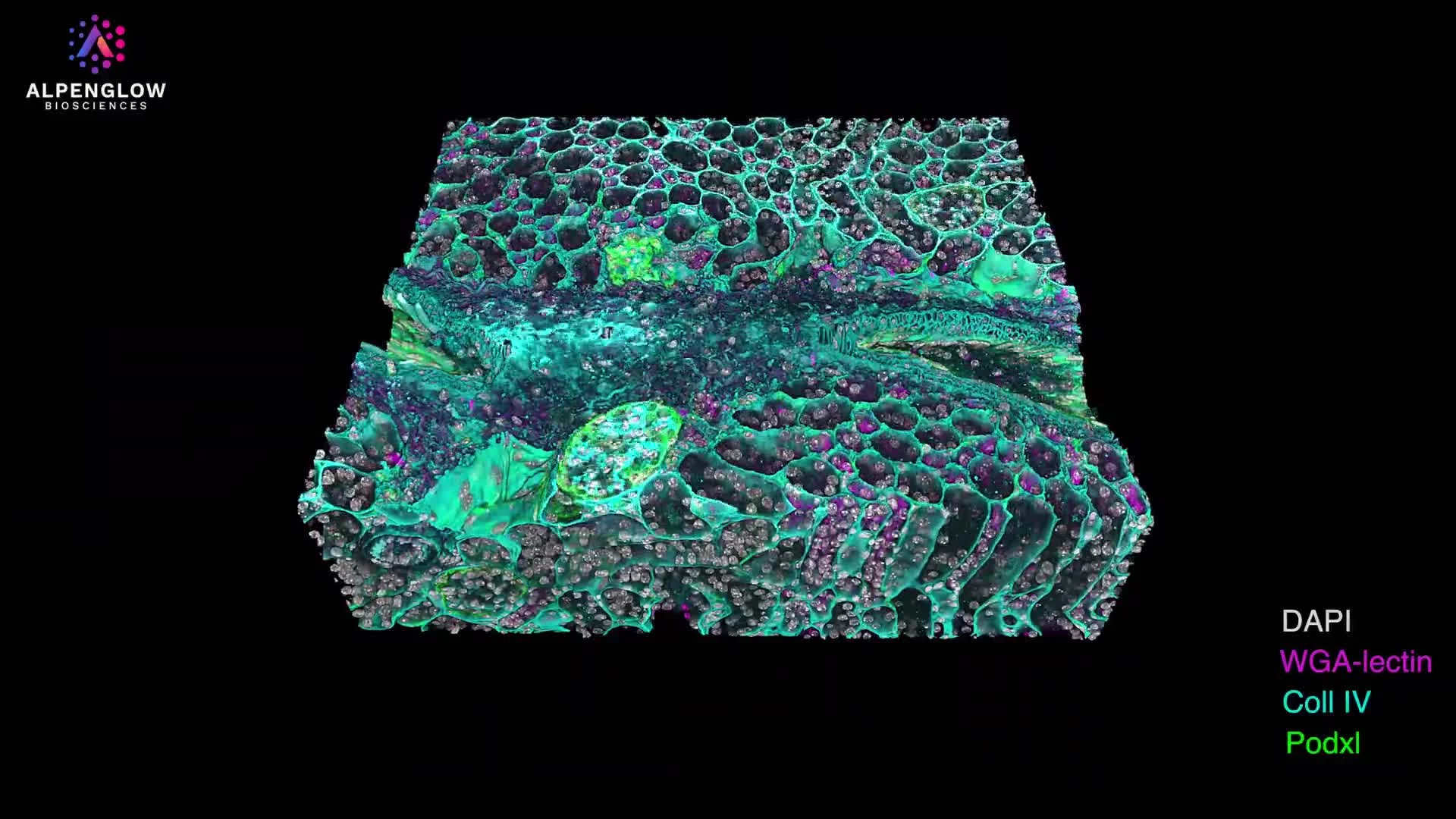
Traditional histology captures thin sections from complex tissue. 3D tissue imaging preserves depth, architecture, and spatial relationships for whole tissue imaging, spatial profiling, digital pathology, and quantitative analysis.
2D sections vs 3D context
Why can 2D tissue sections miss important spatial biology?
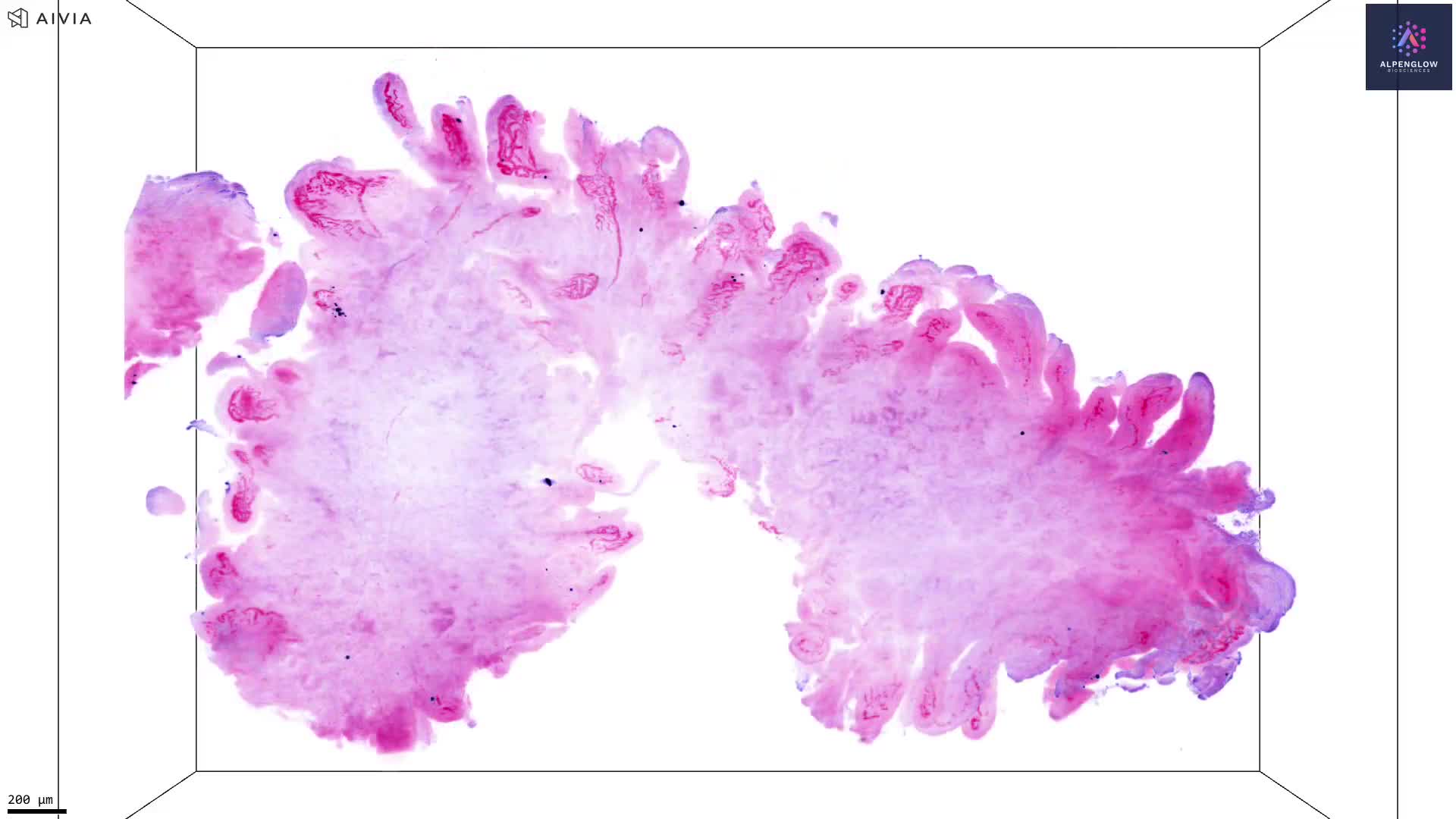
Thin sections capture isolated planes from a larger specimen. 3D tissue imaging expands the sampling volume, preserves depth, and retains connected tissue architecture.
Sampling coverage
Selected sections may miss sparse, localized, or unevenly distributed features.
More tissue volume can be examined across multiple regions and depths.
Spatial depth
Depth is reduced to a thin plane, limiting interpretation above and below the section.
Cells and structures retain their positions within the tissue volume.
Structural continuity
Branching structures appear as disconnected fragments across separate sections.
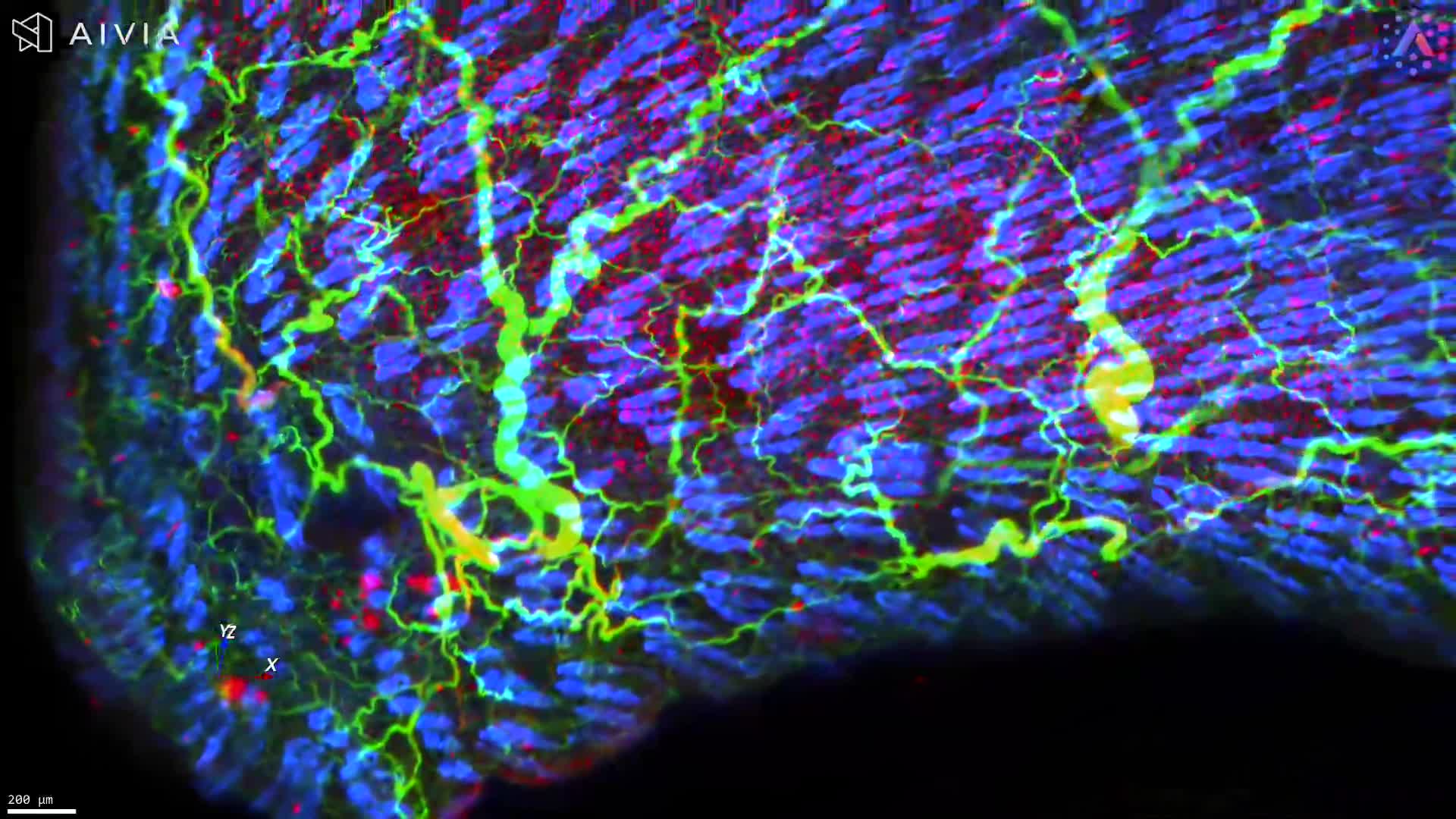
Vessels, nerves, glands, follicles, and immune structures remain connected.
Peer-reviewed evidence
What changes when tissue is examined in 3D?
More complete sampling
Whole tissue volume can reveal disease extent missed by selected sections
Whole-lymph-node OTLS imaging enabled volumetric assessment of breast cancer metastases, revealing metastatic extent that could be underestimated from selected 2D sections.
J Biomed Opt · 2022Structural continuity
3D reveals architecture that cannot be measured from isolated cross-sections
OTLS preserved complete prostate gland networks, enabling measurement of branching, curvature, torsion, and connectivity. 3D architectural features were associated with biochemical recurrence across two cohorts.
Modern Pathology · 2026Added predictive information
Volumetric tissue context can improve downstream predictive analysis
Weakly supervised AI applied to 3D pathology data improved prognostic performance compared with corresponding 2D approaches, demonstrating the value of information captured across the tissue volume.
Cell · 2024Key biological applications
Which biological questions benefit from 3D tissue imaging?
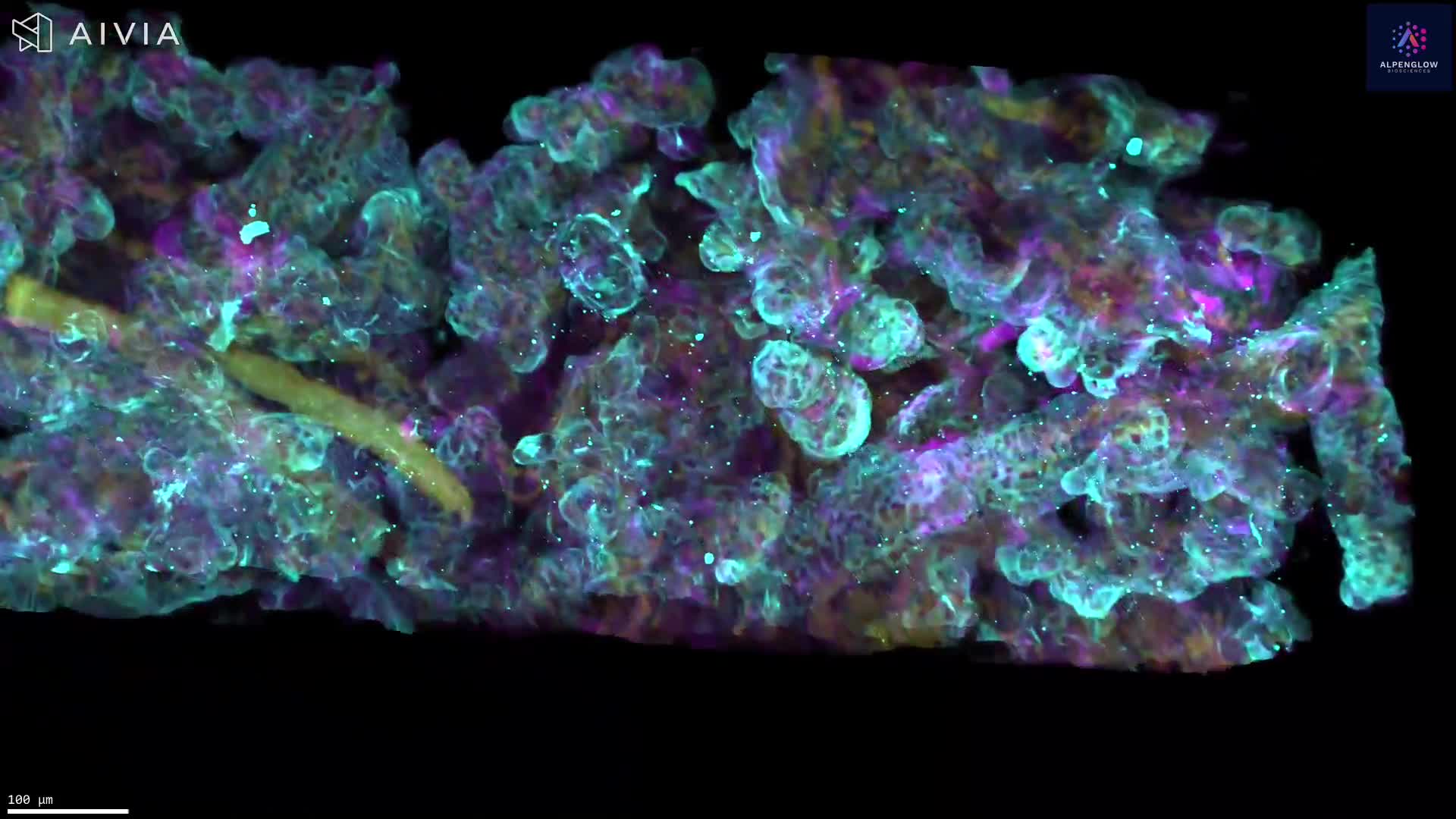
3D tissue imaging is particularly valuable when interpretation depends on complex structures, cell distributions, rare features, or tissue organization across depth.
Convoluted structures
Vessels, nerves, glands, follicles, and crypts often require 3D context to evaluate shape, branching, and continuity.
Complex cell distributions
Immune cells, tumor regions, and stromal compartments can be interpreted in relation to nearby structures across tissue depth.
Sparse biological features
Rare cells, focal lesions, tertiary lymphoid structures, and localized features can be missed when sampling is limited.
Tissue-scale architecture
Whole tissue imaging helps reveal how compartments, regions, and structures are organized across the sample.
Where this matters
These capabilities support translational research, drug development, spatial biology, and digital pathology programs where intact tissue context affects interpretation.
From tissue to data
How does Alpenglow turn intact tissue into quantitative 3D data?
Aurora™ connects whole tissue imaging, volumetric data management, and AI-powered analysis in one end-to-end 3D spatial biology workflow.
3Di™
Image intact tissueLight-sheet microscopy captures tissue architecture as a high-resolution volumetric dataset.
3Dm™
Manage the volumeLarge 3D datasets are processed, aligned, organized, and prepared for review and analysis.
3Dai™
Quantify the biologyAI-powered analysis measures cells, structures, tissue features, and spatial relationships across the volume.
Move from sections to spatial insight
Ready to see what 3D tissue imaging can reveal in your samples?
Explore whole tissue imaging, spatial profiling, and AI-powered quantitative analysis with the Aurora 3D™ Spatial Biology Solution.
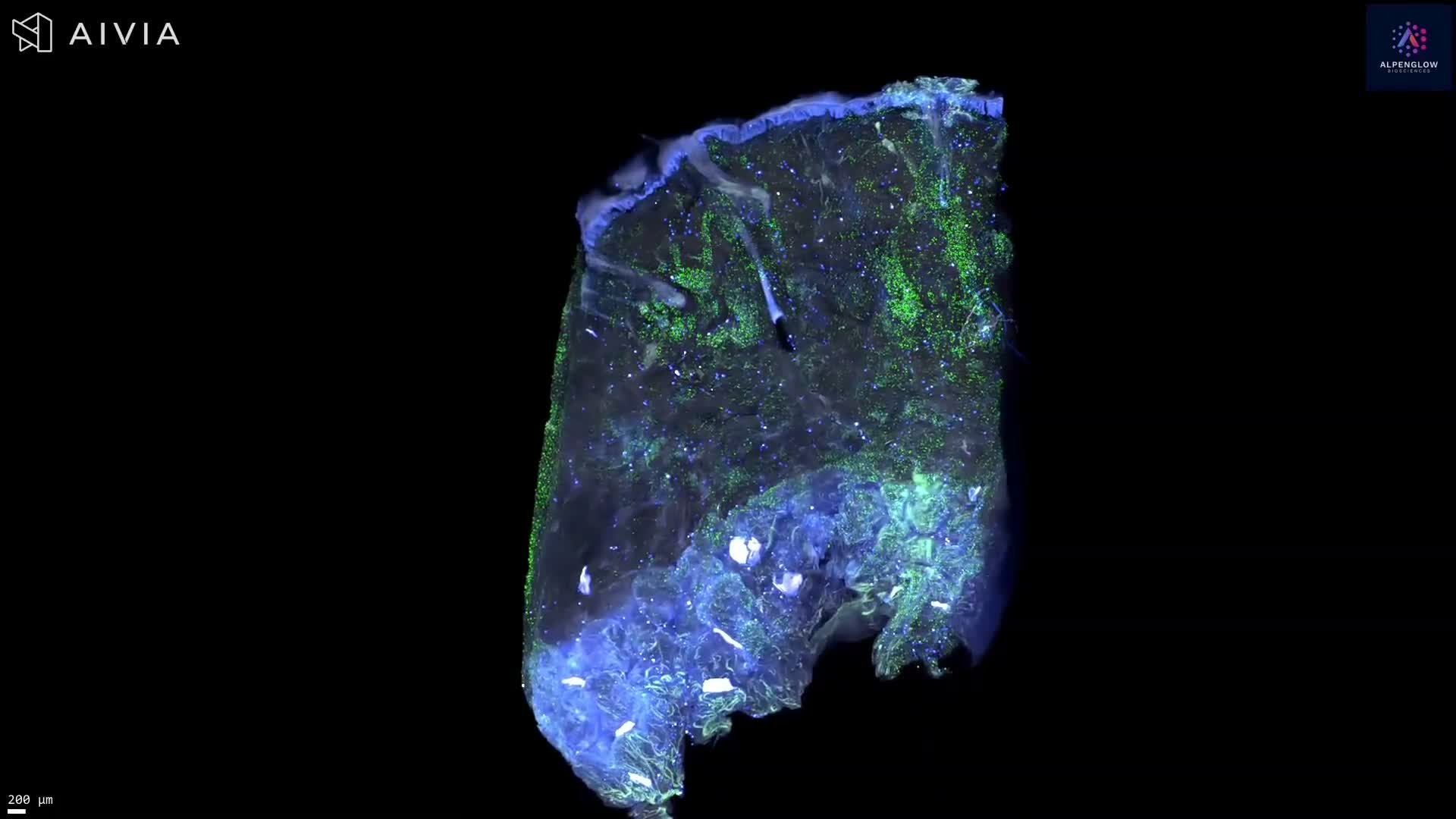
High-resolution 3D fluorescence imaging reveals an entire hair follicle in an intact HS biopsy, including individual cells, nerve networks, mast cells, and measurable spatial relationships.
This dataset presents high-resolution 3D fluorescence imaging of a hair follicle within an intact hidradenitis suppurativa (HS) skin biopsy, revealing follicular architecture, surrounding nerve networks, and individual cells throughout the imaged tissue volume.
The visualization begins with a 3D reconstruction of the complete hair follicle, showing its morphology and the intricate distribution of nerve fibers and mast cells in the surrounding tissue. Virtual 2D sectioning enables detailed examination of cellular structures at different depths without physically sectioning or destroying the specimen. The dataset is then visualized again in 3D to reveal the spatial organization of these structures.
Fluorescence markers:
- TO-PRO-3 (blue): Cell nuclei
- PGP9.5 (white): Nerve fibers
- Tryptase (green): Mast cells
The combination of high spatial resolution and volumetric imaging enables quantitative assessment of follicular morphology, cell counts and densities, nerve architecture, and distances between cells and nerve fibers.
This approach supports the investigation of follicular structures and neuroimmune interactions in HS while preserving their spatial relationships within the intact tissue.
Learn more about dermatology applications
Learn more on image analysis using Summit AI(TM)